Archives for children

What is the One Crucial Skill You May Not be Teaching Your Children?

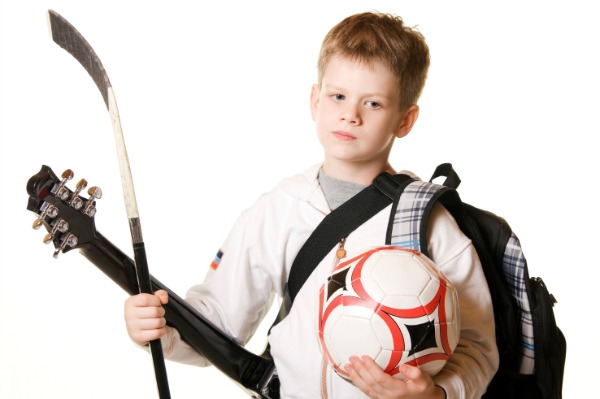
If you’re focused on your kids’ academics and sports, you may be missing the boat.  More than ever, society defines success for our children as good grades, how many activities/sports they participate in, and even how many friends they have. Beyond participation, we’re taught they need to excel in order to succeed in life.  Consequently, we invest tons of time, energy and money into these areas of our child’s development.  We bend over backwards to chauffeur them to activities, to study with them, hire tutors and send them to the best schools, or to hire private coaches and get them on the travel teams.  Of course, these are worthwhile and valuable aspects of life. But, if your relationship with their other parent is suffering in the meantime, you’re missing the boat on a crucial aspect of your child’s development.

There’s a meme on social media that states something like “Don’t worry about watching your children’s behavior.  Worry about your children watching yours.” Regardless of their age, our children ARE watching us: how we love their other parent, argue with their other parent, and how we handle our own emotions.  (They’re also observing how we manage other areas of our life (spiritual, health and fitness, involvement with extended family, career, financial et cetera).  If your relationship with their other parent is limping along or in conflict, that can have a huge impact on what a child learns about relationships and have repercussions well into their adulthood.  We may not be aware of the lessons we are teaching, but as their parents, we are unconsciously modeling for them how to act and react.  If we are easily annoyed with, or contemptuous of, our spouse, kids learn that’s how married couples view one another.  If we play the victim and feel sorry for ourselves, kids learn that’s how to handle feelings of hurt or loneliness.  If we turn to alcohol, overeating, or another compulsive behavior to numb our own emotions, kids learn that’s how to handle painful feelings.

While we may be busy raising children who are achieving academically, or who are involved in many activities, as parents we may be missing the opportunity to develop something much more important to a child’s development –their ability to establish and maintain healthy relationships.  Who cares if they become a prize winner, champion or professional success if their personal life is in shambles? Or if they’re lonely? Or in conflict with those closest to them?  I bet we all could think of at least one person in history who made a significant contribution to society but who left a wake of hurt in their personal relationships and/or was depressed, addicted, and even suicidal.  It is likely that these people did not have enough skills in interpersonal relationships and dealing with emotion, even though they were what society defines as “successful”.

Our children are watching and learning how we handle interpersonal interactions every day. Therefore, they need us to develop OUR ability to handle conflict well, to give and receive love, and to deal with our own emotions effectively.  Our schools have begun to teach these skills, but not nearly enough.  Do not underestimate the amount they are observing and concluding just from witnessing you.

Ask yourself how you rate on the following statements:

  • I am actively engaged in learning how to be a better spouse, parent and/or friend.
  • I take responsibility for all relationship conflicts when they arise.
  • I recognize when I need support and am continually seeking help.
  • I read/listen to something instructional or inspirational for at least 30 minutes each day.
  • I acknowledge my feelings, express them appropriately, and decide what’s the best course of action.

I’m suggesting you spend as much time and effort on yourself as you do on your children because BOTH of you benefit – you’ll have a better relationship with their other parent, your kids will be watching positive and healthy interactions, and you’ll feel calmer and better able to handle what life throws at you.  Success in sports and academics is not the be-all end-all for our children.  Success in relationships (intimate, familial, collegiate) will have a tremendous impact on your future adult-child’s happiness and success in life, for we are humans who live in community and need one another.

Inspire Your Kids To Love The Sports You Love

Families loving sportsWhen we first had children, we wanted to get them involved with skiing, but wondered how we could pass our love of the sport along to them. After all, how do you explain to any beginner that spending most of the day trying (with some, but not much, success) will indeed pay off when they’re experts? How do you explain to them that this learning process will take not just days or weeks but years to master?  How do you convince them that the fun and excitement to be had will make them feel fully alive like nothing else on Earth?  There are several key concepts that can help you encourage your children to love what you love and they can be applied to any sport, hobby or whatever you are passionate about.  Here, we’re using skiing as an example, but these same concepts can be used to help share YOUR passion with your children.  Here’s how to inspire children…


#1 – Make it fun.  Your children are beginners and don’t yet know the fun that awaits them up on top of the mountain.  We need to make the shuffling on flat beginner terrain – actually the whole experience- fun for them.  If that includes time spent climbing piles of snow outside the lodge and then sliding down on cafeteria trays, let them.  True, the cost per run ratio is pretty poor at that moment, but you are allowing them to find joy in simply being on the hill.  It will come, in good time, that they’ll find as much joy actually doing the sport.  At this early stage, shoot for a fun experience.


#2 – Have patience and understanding for your child’s developmental stage.  Starting around age 18 months, children are working on exploring their world.  Their task at this stage is trying something, maybe succeeding or failing, looking for whether you are around and paying attention, and then trying again.  Expect any new activity to be touch and go.  Their behavior will not be goal directed: they are simply exploring and curious about what the outcome may be. You may plan to get a certain number of runs in, but for kids this age, that’s not where their brain is at.
Later, during early childhood, they want to emulate you.  Be the model for what you’d like them to become.  If you’re on a snowboard, don’t be surprised when they say they want to do that.  On the other hand, if you drop them off at the base lodge, then drive into town for a big breakfast and shopping, they’ll ask to go.  So, be aware of what you’re modeling for your kids because surely they’ll want to do that too.


One thing that is consistent throughout all developmental stages is their wish for your attention and approval, no matter whether they’re ‘succeeding’ or not.  Our children desperately want us to notice them and be pleased by their exploration and emulation of us.  Be ‘around’ for them, notice them, and delight in whichever developmental stage they’re at.


#3 – Watch your language.  I’m not talking about swearing.  Notice what you say about skiing, whether your comments be related to the gear, the weather, the traveling, the expense, or the terrain.  Kids listen to everything we say, even when it seems as if they’re not.  Over time, our way of thinking becomes theirs, especially at the younger ages.  The reason is that neuropathways are being created in a child’s developing brain.  When they hear, or see, the same behavior from us again and again, their brains ‘learn’ this way of thinking.  So, if we complain again and again about carrying all the heavy gear, eventually they will too.


#4 – No matter how technical your ability is, have a professional teach your kids.  This was a difficult one for us.  We’ve been skiing for years; we know how to carry our skis properly, stand up from falling, initiate turns, et cetera.  The expense of hiring someone else to teach what we were perfectly capable of teaching was a hard pill to swallow.  What we weren’t capable of doing was keeping our emotions under control.  Most kids act differently (read: better) for most anyone who is not their parent. Teaching our own loved ones can be exasperating.  One moment things are fine and next thing you know, you’re one of those parents you swore you’d never be: yelling at your kids on the slopes.  Now, no one’s having fun AND you’re paying for this whole miserable experience!  Delegate the teaching, no matter how proficient you are, to a neutral 3rd party instructor (who, by the way, is also an expert at dealing with young children’s antics.)


#5 – Go to places that cater to young children.  It’s not about you anymore.  We chose a smaller hill as our home mountain when we moved the family back East because of their excellent children’s programs, not because of the mountain’s acreage or vertical rise.


#6 – Connect your children with other kids doing the same activity.  It’s not realistic to think that any kid over the age of 8 would want to ski with their parents.  They’d rather be with friends (which is developmentally normal).  Whether you sign them up for ski school with their friend OR you find a season-long program where they ski with the same kids and the same coach every day, have them be with their peers.  Skiing, like most sports, is a social endeavor as much as an athletic one.  They’ll be so much more eager to go there when they have social connections on the hill.


You can inspire your children to love your sport or hobby as much as you do.  But it takes countless instances of you being understanding of their developmental needs and setting them up for success.  Becoming proficient at a new activity or hobby can take many years. When they develop a love for it, the reward will pay off for them for decades.  And, one day they will want to ski with you again -perhaps when they become parents themselves and can appreciate all the hard work and investment you gave to get them there.  And if you see them doing the same things for their own children that you once did for them, you’ll know that you did, indeed, inspire them.
Developing good relationships with your kids can be challenging, especially with all the pressures in today’s fast-paced world.  Maybe you’ve tried family counseling before with little to no results.  Maybe you ended up more frustrated or things improved a little, but only temporarily.  The therapists at Couples Therapy Center of NJ can help.   We are experts in building healthy relationships – of all types.  We serve families and adolescents in addition to couples.  Call us at 908-246-3074 or email getsuppport@couplestherapycenterofnj.com now to schedule your appointment.  Most people wait months, even years, before coming in.  Instead, reach out to us to start making positive changes today.

Focus on Family: Showing Love By Listening

Showing Love By ListeningListening shows children we love them. As parents, we listen to our kids by paying attention to the words they are saying and by repeating back to them what we’ve heard them say. In Imago Therapy, this is called “mirroring.” Parents do this by saying, “What I heard you say was…”  Parents can also help by remarking on what the child has said that makes sense to them. Listening, repeating, and understanding helps kids feel valued by their parents. There are times this is all that’s needed to help your child cope with something challenging.


As a parent myself, I have witnessed firsthand how listening and mirroring has helped my child. Once on vacation, my daughter wanted us to buy her a hermit crab after her friend got one. My first thought was, “Oh no, not another pet to clean up after.”  I held that thought inside of me and said to my daughter and husband, “Let’s talk together about it tomorrow.”  On our drive out of town, we took turns talking. My husband began by saying his thoughts. Then my daughter stated why she wanted a hermit crab: “We could buy it colored rocks and all we’d have to do is feed it. I REALLY, REALLY want one.” I mirrored her by saying, “I know you REALLY, REALLY want a hermit crab. I heard you say we could buy it colored rocks and all we would have to do is give it food. Did I get it?” She responded “Yes.” She added more and I mirrored that too. When it was my turn I told her that I understood her wish because I liked having a hermit crab as a pet when I was a child. Soon, we were onto a different subject. A few days passed. My husband and I realized that she hadn’t mentioned the hermit crab again. We were amazed because she had been so adamant! We were further amazed when she saw the friend with the hermit crab again and made no further mention of her wish for one as a pet.

What I realized was this: my daughter had felt heard and understood. And that was enough. By choosing not to say anything at first, I gave her the “space” to fully tell us how she saw things. She felt loved by us in this way. The content of her wish (wanting the hermit crab) wasn’t nearly as important as the process of being listened to. All children want their parents’ love and attention more than they want any material thing. Just as you do with your spouse, give your child the gift of being truly heard.

To schedule an appointment to learn more, call 908-246-3074 or email  getsupport@couplestherapycenterofnj.com

Sex In Marriage: Keeping the Passion Alive, Post Children

Sex In Marriage: Keeping the Passion Alive, Post ChildrenRemember when you were newlyweds and you couldn’t get enough of each other?

You’d dress up for dates so that you looked and felt sexy and then eagerly anticipate returning home together? And other evenings when you weren’t going anywhere, you’d slip something sexy on to spice things up in the bedroom?  But now you are parents, and things have changed dramatically. Where did the excitement, passion, and anticipation go? How do we, as parents, maintain our sexual selves?

In our culture, good parents are presented as nurturing, self-sacrificing, and asexual. There is a disconnect between being a parent and being a sexual being. Many parents pass down this sense of detachment from their own sexuality in several ways:

  • disapproving of a child’s first sexual exploration (masturbation)
  • not speaking of sex
  • avoiding direct and factual discussions of the body

If you are like many couples, you probably enjoyed being sexual together early in your relationship. You could plan elaborate dates and spend time on foreplay. You took time to relax and explore one another during sex. It was hot. You felt sexy; you needed and wanted sex. Then you became parents and your sex life took a backseat.

It can be all too easy to put sex on the backburner, but in a world full of career, childrearing, running a household, and giving to others, sex can be a respite from the demands of everyday life. Both the mundane and the stress of daily living are transcended during sex play between married partners.  It’s a way to close the door on the world and explore oneself and one’s partner with the only purpose being to experience pleasure and express love.  It is a means for couples to connect in a way that they don’t with anyone else.

Most couples counseling emphasizes talking as the primary way to communicate. While talking is important, our bodies can communicate as much or more than our words. Sexual touch is a powerful communicator. It reminds us that ‘We really are connected. We DO love one another. It is safe to let go in front of my partner. He still desires me. She still gets excited at my touch.’  After an argument or disconnect, sex can feel like hitting the reset button for the marriage.  It lets us know that, ‘We hit a rough patch, but now we’re connected once again.’

How do we bring good sex back into marriage? Finding new ways to think about sex can help.

  • Value your partner as a person who is different from you – think of him/her as a mystery to be rediscovered.
  • Think of foreplay as beginning hours or days before you plan to be together; flirt, enjoy each other’s company and let the anticipation build.
  • Value sex as a way to reconnect after an argument or rupture.
  • Remember that as a human, you are a sexual being and this is a gift.
  • Remember that having a strong marriage is an essential part of being a good parent;  make sure you focus on your partner too, rather than just your children.
  • Talk to your physician about any physical issues that may be interfering with sex.
  • Talk to your therapist about any emotions that may be interfering.

To learn more about how to pump up the passion after you’ve had children, schedule an appointment here at Couples Therapy Center. Call 908-246-3074, email mkeller@couplestherapycenterofnj.com

Share Your Passion: Teach Your Children To Love What You Love

children learningWhat is it you love to do?  Are you passionate about a sport, hobby, career or music? As parents, we want our kids to love the same things we do.  We want them to experience the same joy we experience.  Is there a way to make this happen? Can we teach our children to share our passion for something?

It’s likely that you know someone with his/her own passion who has been unable to get his/her kids involved. Maybe the child refuses to try. Or maybe the child participates, and even excels, at something the parents love, but doesn’t really feel any passion for it him/herself. The child might only participate because he/she has been pressured into it or feels it’s one way to get attention and praise.

That’s not what we want for our children. We expose them to the sport or hobby we are passionate about with good intentions: to share our excitement and joy with them. We long for them to feel the same enthusiasm that we do. We want them to incorporate this into their lives as they grow into adulthood. And naturally, we want them to excel at it, to go beyond the limits we reached ourselves.

We cultivate in our children a love for something by making it fun for them. We can do this by ensuring that there’s no pressure to perform or excel in competition.  We can help them enjoy the learning process and teach them it’s okay to make mistakes. We should allow kids to experience our hobby the way that they naturally do, even though this might not necessarily be our way. It’s important to put aside your own agenda and goals. Really notice what your kids are experiencing and respond:

  • Is your child relaxed and laughing?  Great, continue.
  • Is your child getting stressed or tense?  Ask them what help they need and do your best to give it to them.
  • Does your child need a break?  Then, by all means, take a break!  This is not a race or competition.

Your goal at this early stage isn’t to develop her/him into a world class athlete or musician. Your goal is to grow your child’s love for this activity.

If teaching your child has been challenging at times, hire someone else to teach him/her. Enroll your child in a class or program with other children the same age. You don’t have to be the teacher, you only have to expose your child to it and make it a fun experience.

To make things fun for your children, you must also be connected with them. When I say connect with your child, I’m talking about sharing in his/her small accomplishments with enthusiasm, not criticism.  Don’t focus on what needs to be done differently. You want them to feel happy, curious, and eager to try. Here’s how to connect with your child’s learning experience:

  • Notice and comment on times your child is trying his/her best.
  • Give praise when a task is performed correctly.
  • Do the activity yourself so you can model how much happiness this brings you.
  • Attend and watch practices and performance.
  • Don’t check email while you are there.
  • Don’t just drop off and pick up.

Showing interest in your child’s learning experience will show him/her your love for this endeavor and will also show your love for him/her.

To learn how to grow your child’s interests without pushing them too hard, schedule an appointment here at Couples Therapy Center. Call 908-246-3074, email mkeller@couplestherapycenterofnj.com 

Focus On Family: Children Need Affection

We love our children deeply, in a way that is difficult to measure.  Much of our time is spent caring for them, thinking of them, teaching them, and helping them grow.  Since we invest so much of our time, thoughts and caring in our children, most parents would probably say, “Of course my child knows I love him/her.”  But how often do we really express our love and affection to our children?

This month, I’ll focus on one important way of expressing love for our children: appropriate physical affection.

A parent can show affection to their child in many ways, including Read More

Focus on Family: Allowing Children What They Need

girl with bunny

What do our kids really need to grow up to be healthy and successful?  There is a lot of pressure for kids to excel in school and at test taking, to join numerous extra-curricular activities, and from themes in the media to be advanced, and even sexy.  In the past, I’ve touched on some of the things children need, including love, attention, affection, to be heard, and to be disciplined with respect.  My focus now is on noticing what your kids are telling you they need. Read More