
Archives for conflict

Solving The Most Common Relationship Issues: We Argue Over Every Little Thing

Does this scenario sound familiar in your relationship–you and your partner are having a great time spending quality time together on a rare kid-free day. You begin talking about how the kids are doing in school and suddenly you begin disagreeing about how to handle a situation that arose with a teacher. The disagreement escalates, and before you know it, there are raised voices, angry words and a perfectly good day feels ruined. Do you feel that you and your partner are stuck in this pattern of constant arguing and bickering-even over things that feel minor?

Contrary to what may be popular belief, arguing is not a bad thing. Actually, as a couples counselor, it raises a red flag to me when a couple will tell me “We never fight.” That may let me know that the couple is avoiding discussing any conflict or differences due to fear of those discussions escalating into fights. Conflict is a natural part of every relationship. When you have two people with different backgrounds, perspectives and personalities trying to navigate through the many hurdles of a relationship, of course there will be conflict along the way. And these conflicts will likely lead to arguments at times. So, the arguing itself is not the problem; but the WAY you argue and manage your conflict may be!

If you find your relationship is plagued with constant bickering, here are some tips that may help in managing the conflict.

  • Share opinions respectfully-You likely will disagree on a lot of subjects and that is okay. Share your “side” in a way that doesn’t indicate blame or attack. Use “I” statements to focus on your thoughts and feelings on the subject. It may seem like a minor difference but beginning with the word “you” will automatically feel like attack towards your partner. Think of the difference in the way this sentence would be heard and perceived: “You are so lazy. Why can’t you load the dishwasher correctly!” VS. “I would find it helpful if the silverware was loaded facing out so they don’t need to be rewashed.”
  • Stay focused on the present subject-How often do you and your partner start out arguing about one subject, and suddenly you are each bringing up grievances from long ago? It is common to want to use what we perceive as past mistakes for “evidence”, and suddenly we are arguing about something that happened years ago. The problem with this is people cannot effectively resolve several issues in one discussion.  Limit your talk to just one occurrence or item.
  • Don’t try to WIN- In other words, allow for the possibility that you may still disagree.  Instead, the goal should be increased understanding of your partner and and vise versa. Not every problem is solvable and that is okay! While there may be some conflicts that require an ultimate resolution, many of our day to day conflicts will never be resolved. Instead of arguing to “win”, work to give your opinions and feelings in as calm and neutral manner as you can. When listening, be curious about your partner’s opinions and feelings.  This skill sets the two of you up as not adversaries, but allies working to find a commonality.  This skill, employed consistently, increases the likelihood of coming to a solution you both feel okay about.
  • Acceptance-In the end, accepting that our partner is a different person than us is crucial to managing any conflict. The two of you grew up in different families with different rules of engagement and maybe different values.  At its most mature level, love is accepting another human, as is – faults and all.

Managing conflict can be one of the toughest challenges in a relationship, but learning these skills can allow you to do so in an effective way that helps bring you even closer to your partner! For more information or help with these skills, please contact us at getsupport@couplestherapycenterofnj.com or at 908-246-3074.
What is the One Crucial Skill You May Not be Teaching Your Children?

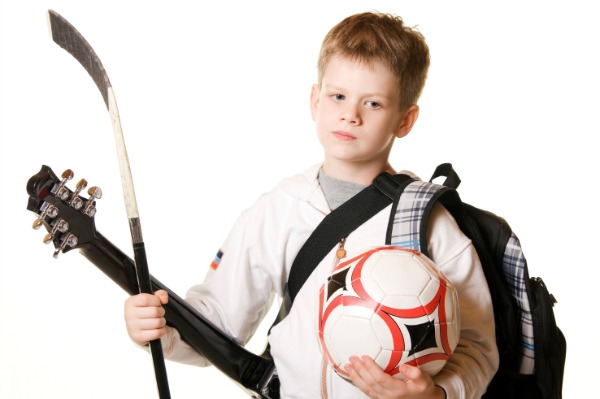
If you’re focused on your kids’ academics and sports, you may be missing the boat.  More than ever, society defines success for our children as good grades, how many activities/sports they participate in, and even how many friends they have. Beyond participation, we’re taught they need to excel in order to succeed in life.  Consequently, we invest tons of time, energy and money into these areas of our child’s development.  We bend over backwards to chauffeur them to activities, to study with them, hire tutors and send them to the best schools, or to hire private coaches and get them on the travel teams.  Of course, these are worthwhile and valuable aspects of life. But, if your relationship with their other parent is suffering in the meantime, you’re missing the boat on a crucial aspect of your child’s development.

There’s a meme on social media that states something like “Don’t worry about watching your children’s behavior.  Worry about your children watching yours.” Regardless of their age, our children ARE watching us: how we love their other parent, argue with their other parent, and how we handle our own emotions.  (They’re also observing how we manage other areas of our life (spiritual, health and fitness, involvement with extended family, career, financial et cetera).  If your relationship with their other parent is limping along or in conflict, that can have a huge impact on what a child learns about relationships and have repercussions well into their adulthood.  We may not be aware of the lessons we are teaching, but as their parents, we are unconsciously modeling for them how to act and react.  If we are easily annoyed with, or contemptuous of, our spouse, kids learn that’s how married couples view one another.  If we play the victim and feel sorry for ourselves, kids learn that’s how to handle feelings of hurt or loneliness.  If we turn to alcohol, overeating, or another compulsive behavior to numb our own emotions, kids learn that’s how to handle painful feelings.

While we may be busy raising children who are achieving academically, or who are involved in many activities, as parents we may be missing the opportunity to develop something much more important to a child’s development –their ability to establish and maintain healthy relationships.  Who cares if they become a prize winner, champion or professional success if their personal life is in shambles? Or if they’re lonely? Or in conflict with those closest to them?  I bet we all could think of at least one person in history who made a significant contribution to society but who left a wake of hurt in their personal relationships and/or was depressed, addicted, and even suicidal.  It is likely that these people did not have enough skills in interpersonal relationships and dealing with emotion, even though they were what society defines as “successful”.

Our children are watching and learning how we handle interpersonal interactions every day. Therefore, they need us to develop OUR ability to handle conflict well, to give and receive love, and to deal with our own emotions effectively.  Our schools have begun to teach these skills, but not nearly enough.  Do not underestimate the amount they are observing and concluding just from witnessing you.

Ask yourself how you rate on the following statements:

  • I am actively engaged in learning how to be a better spouse, parent and/or friend.
  • I take responsibility for all relationship conflicts when they arise.
  • I recognize when I need support and am continually seeking help.
  • I read/listen to something instructional or inspirational for at least 30 minutes each day.
  • I acknowledge my feelings, express them appropriately, and decide what’s the best course of action.

I’m suggesting you spend as much time and effort on yourself as you do on your children because BOTH of you benefit – you’ll have a better relationship with their other parent, your kids will be watching positive and healthy interactions, and you’ll feel calmer and better able to handle what life throws at you.  Success in sports and academics is not the be-all end-all for our children.  Success in relationships (intimate, familial, collegiate) will have a tremendous impact on your future adult-child’s happiness and success in life, for we are humans who live in community and need one another.

Save Yourself From An Argument On Your Next Vacation

Romantic_kiss_sunset_cliché


Imagine: you and your partner have planned a trip to a great summer destination. You each pack your own bags, arrive together, and unpack when you get to your room. Your bag contains: books, boardgames, movies, candles, an eye mask, massage oil, and an assortment of teas. You’ve been looking forward to lazy days lounging around indoors so you can unwind on this trip. You look over as your partner unpacks her bag and can’t believe your eyes! Her bag contains: a snorkel, flippers, sport glasses, daypack, hiking boots, cycling shoes, shorts & helmet. What?!

Now your thoughts begin to run wild: “She isn’t planning on spending any time with me this trip. She prefers doing activities to being with me. She’s here to enjoy the locale, not to enjoy MY company. How could she not know we’re here to lounge and RELAX?!?” Maybe your partner’s thoughts begin to run wild as she can see what things you’ve packed. She may be telling herself: “She isn’t planning on spending any time with me this trip. She prefers lounging around to being with me. She’s here for R&R, not to enjoy MY company. How could she not know we’re here to have fun exploring TOGETHER?!?”

What can get generated by this stuff we’re telling ourselves? Feelings! Both partners may come to feel hurt, disappointed, concerned, sad, annoyed. And if there’s any similarity between this scenario and your childhood, this situation is being exacerbated by your history of past hurts. And all this on a vacation you’ve spent effort and money to make happen!

Not verbalizing what you’re thinking BEFOREHAND, gets couples in alot of trouble. In addition to the time it takes to plan your trip, book your flight, & arrange for the house to be taken care of, add in time to talk about your expectations. Touch on…

• When we first arrive, I want to…
• During the trip, I’d like to…
• It’s not a big deal to me if we don’t get to…
• My intention for this vacation is…
• How you and I can enjoy each other’s company is…
• I imagine how much time we’ll spend with others vs. by ourselves is…

A 30 minute conversation before you leave could save you from conflict, arguing, and hurt feelings when you’re there. It will allow for more time for what you’ve traveled for: to enjoy each other, to relax and/or feel excited, and to reconnect with yourself.

How to Give a Meaningful Gift That Can Help You Reconnect With Your Partner

You’re online or in a store shopping for a present for your partner and you don’t have a clue what would make a good gift. Maybe you don’t know what he or she wants. Maybe one of you is out of work or you are feeling the recession in some other way. Maybe there’s a chill in the relationship and neither of you is feeling particularly motivated to buy a gift. Whatever the case, you want to get something and you want it to be something that your partner will appreciate.

I’ve written before on how to find the perfect gift. If you are looking to buy something for your partner you can:

  • Do the re-romanticizing exercise to get a list of the exact things your partner wants.
  • Listen closely to what your partner says when you’re out at a store, reading the paper, or out with friends.
  • Find out if your partner keeps a file of wish list items (on paper or stored with online retailers). 
  • Ask your partner’s friends, or the kids, if they know what your partner wants.

But you don’t have to spend a lot of money to give your partner a meaningful gift. How about a gift that is thoughtful rather than material? Have you ever received a gift that was created by someone that reflects the relationship, history, or values that the two of you share? These can be the most precious gifts of all. In a culture marked by consumerism and disposable goods, gifts like this can be a welcome departure from buying more THINGS and spending more MONEY.

To create a meaningful gift:

  • Create an album of photos of the good times you’ve shared together.
  • Do the Flooding Exercise to shower your partner with appreciations.
  • If you’re artistic, draw, paint, or sculpt a symbol of your union.
  • If you’re musical, compose something for him/her.
  • If you’re poetic, personalize lyrics of an existing song and sing it (or have it sung by a professional if your singing sounds like nails on a chalkboard).
  • If you’re physical, give your partner an amazing massage on a date night that you’ve planned. Include massage oil and music in an uninterrupted and relaxing space.
  • If you’re visual, create a paper chain and write the name of a special place, a memory, or a joke the two of you share on each link.

What if there IS tension and distance between the two of you right now? Sure, it’d be emotionally easier to give a new tie or even a new car. For one, at least you got them something. Secondly, a hot new toy can serve as a distraction from what’s going on in your relationship. I want you to consider going out on a limb instead. If you create a meaningful gift, it will be as if you’re extending an olive branch or peace offering to your partner. Even if your partner has been giving you the cold shoulder or has been nitpicking at you, underneath their hard shell, he or she is likely longing to be close to you. You partner may have difficulty admitting it, but it’s likely that he or she is dying to receive your love and attention.

Imago therapists like to say, “The conflict is a cry for connection.” A meaningful gift can be a great way to help move past the conflict and connect with one another. Be the one to extend your hand to connect – even for a moment. Be the person who is brave enough to admit that, you too, want this closeness. Be the change you want to see by giving a truly meaningful gift.

To learn more, schedule an appointment here at Couples Therapy Center. Call 908-246-3074, email getsupport@couplestherapycenterofnj.com or go to www.couplestherapycenterofnj.com.


Reactions: How Your Own Responses May be Adding To Your Relationship Troubles

When you’re upset, do you tend to pull yourself inside or express yourself outwardly? Do you clam up or rain down imaginary hail on everyone around you? Which is your ‘go to’ reaction? And, could your reactions be making things worse? What you say or do may be ADDING TO the conflict and REDUCING the passion in your relationship.

If you pull energy inward, you may…

  • become quiet or mumble
  • make your body smaller by cowering
  • move behind something
  • leave the room
  • appear unaffected
  • block out what you’re hearing
  • construct a protective shell

If you expand energy outward, you may…

  • get louder or shout
  • make your body larger by standing up
  • use big hand and arm gestures
  • pace or stomp around the room
  • have an urgent need to talk about the issue NOW
  • follow or chase your partner around the house to get things resolved

Whether people contain their reactions or react outwardly, it is often because INSIDE they’re upset, frustrated or any number of painful feelings such as hurt, fear, rejection, or jealousy. We often have painful feelings because one or more of our needs are going unmet.

Needs such as…

  • being heard and validated
  • being understood and empathized with
  • getting affection and sexual stimulation
  • feeling valued and important
  • being loved and cared for.

Now, think about it from your partner’s perspective: if your reactions are any of the above, you may, in fact, be interfering with getting your own needs met. Here are a few examples: It’s going to be extremely difficult for your partner to validate you when you’re screaming. It’s also going to be difficult for your partner to understand you if you’re not telling her/him what you’re upset about. It’s going to be difficult for your partner to reach out to be affectionate if you are stomping around the room. Likewise it’s going to be difficult for your partner to express caring if you’re blocking out what’s being said.

In other words, your reaction may be ADDING TO the conflict and REDUCING the passion in your relationship. You may be getting in your own way and preventing yourself from getting your needs met and therefore contributing to your relationship troubles! How can you avoid doing this?

Next time you feel yourself getting upset, try to step back and think. What’s upsetting you?
Is it a need you have that’s not getting met? Then take it to the next level by asking yourself: “Will my reaction help me get that need met or will it ensure the opposite – that I don’t get that need met?”

You CAN control your reaction to a large extent. If you normally react inwardly and keep a neutral expression, make sure your partner sees that you feel hurt. If you normally clam up or leave, make sure you speak up (in a non-attacking way) and let your partner know what you are feeling. If you normally react outwardly and become louder, larger or more intimidating, try to react in a less dramatic fashion, so that your partner hears you and gets your point. This will give your partner the chance to see your needs and meet them rather than pushing him/her away. Don’t let your own reactions increase the conflict and reduce the passion in your relationship. You can create a happy, loving relationship where your needs are being met.

To learn more or to schedule an appointment here at Couples Therapy Center, call 908-246-3074, email getsupport@couplestherapycenterofnj.com or go to www.couplestherapycenterofnj.com and use our online scheduler.