Archives for admin

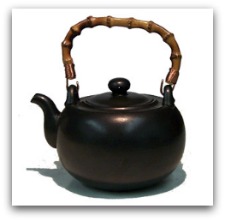
When The Pot Calls The Kettle Black: Dealing with Projection

When The Pot Calls The Kettle Black: Dealing with Projection

“You’re so passive! Why can’t you stand up for yourself?!”

“You’re over-involved with your family. Don’t you consider me!?”

“You’re too emotional! You need to be more logical.”

“You get enraged over the smallest things. You should be more accepting.”


Ever find yourself hating something about your partner? Who hasn’t? Once the initial romance wears off, we get to see many more sides of our partners – both the good and the ugly. Most people dislike some things about their partner for two reasons:

  • Our partner’s traits and actions affect us negatively.
  • We dislike in our partners the very same traits we dislike in ourselves.

The first statement probably doesn’t surprise you, but the second might be a little hard to swallow. In therapy terms, this is called ‘projection’. The idea is that it’s more palatable to see characteristics we dislike in other people than it is to see them in ourselves. It’s so much easier for the pot to call the kettle black. We tend to hate a trait in others (especially if the person is our spouse) rather than to recognize, “Oh, I do this too, sometimes.”

Let me give you an example. In this scenario, a wife tells her husband that an out of town cousin will stay at their house in a few weeks. It’s going to be on a night when the husband usually works late and she says “If you can be here that night, great.  If not, that’s okay.” Even though she says this, the husband knows it’s important to her that he be there and it’s important to him too. Although it’s not easy, the husband manages to change his work schedule. The morning before the cousin’s arrival, the wife tells him that the plans have changed and her cousin is coming a different night instead.  Right away, the husband feels anger swell up inside him. He yells, “What?!  You didn’t even ask me – you went ahead without talking to me first?! Do you know what I had to do to get coverage for that night!? Change it back!” When the wife refuses and says that he doesn’t have to be there, he moves into attack mode with, “You won’t ask her because you let others dictate your schedule. You can’t stand up for us or for yourself. You’re so passive! You’re weak!”

Why did the husband get so angry in this situation? There are several reasons. The first is totally legitimate: It’s not okay for one spouse to make unilateral decisions about things that affect both partners. It’s not that one spouse needs the other’s permission to do something; it’s just that couples should talk about things before deciding.

There are other valid reasons here, but the reason I want to focus on is this: the husband projected traits that he, himself, wrestles with onto his spouse. One clue to this was the way he labeled her behavior by calling her passive and weak. The husband got angry because, on some level, he realizes there are times he can be passive or fail to stand up for himself.  Since this is hard for him, he becomes enraged when he sees the same trait in his spouse.

How can the husband turn his anger or ‘energy’ into something productive? He can own his own passivity and develop the opposite trait: assertiveness. This is an opportunity for him to grow part of himself. Buried in this conflict is the chance to be different.

In this situation, the husband has the opportunity to be assertive by talking to his wife and cousin. He could say, “I felt hurt when you changed the plans without talking to me first. I was annoyed. I had to go through a lot to make that night available, and then you changed it. I wanted to be there. Next time, please talk to me before you decide what to do.” Instead of resenting his wife’s passivity, he can take this opportunity to grow his own assertiveness.

When you find yourself triggered by something that your partner does or says, you can take it to the next level by being curious about yourself. Ask yourself:

  • What is the trait or characteristic that’s angering or hurting me?
  • Do I struggle with that same trait sometimes?
  • What is this an opportunity for me to learn to be instead?

To find out more, schedule an appointment here at Couples Therapy Center. Call 908-246-3074, email mkeller@couplestherapycenterofnj.com 

How Saying ‘No’ to Others Can Mean Saying ‘Yes’ to You and Your Relationship

How Saying ‘No’ to Others Can Mean Saying ‘Yes’ to You and Your Relationship Your boss asks – or rather pressures – you to work this weekend.  A deadline is quickly approaching and your contribution is crucial. But, you already had plans with your family.  You feel stuck choosing between your job and your family.

Your parents or in-laws seem to make plans for you most weekends. It’s either some social function, asking you to help them at their house or just expecting your company. You wonder why your time has come to be determined by other people.

It can be hard to say ‘no’. Life presents many requests and demands on our time: career, household, parents, kids, in-laws, committees, groups – the list goes on and on. When you say ‘yes’ but really wanted to say ‘no’, you often end up feeling guilty, defeated and resentful. Sometimes even signing up for the fun things we WANT to do can leave us feeling overwhelmed!

So, how do you say ‘no’?

First, you (and your spouse if you’re married) must create time to reflect on what is truly important to you. Before you can live the life you long to have, first you have to create it in your minds. Then, write it down. Once you have this mission statement in writing, it will serve as a guide for making everyday decisions.

  • What do you value?
  • Where do you want to invest your time and energy?
  • What brings you joy and meaning?

Second, notice your initial, gut reaction when someone makes a request of you.  Your very first feeling can be very telling.

  • Does your heart sink?
  • Do you feel inspired and excited?
  • Do you dread telling your spouse?
  • Are you eager to tell you spouse?

Third, learn the ‘YES, NO, YES’ response. Use this when want to say ‘no’ but are finding it difficult. The first ‘YES’ is about being true to what you (and your spouse) really value. When you are asked to do something, go back to your mission statement.  If your boss is asking you to work this weekend but you have plans with your family, see what’s in your mission statement about this.  Does it say, “We spend time together as a family doing what we all enjoy”?  That’s what you’d be saying the first ‘yes’ to. ‘Yes’ to yourself, ‘yes’ to your relationship and ‘yes’ to your family.

The ‘NO’ is declining a request. This is hard for many people. It takes courage. Often, when it’s difficult, we acquiesce and then feel resentful or angry.  Sometimes, we get verbally aggressive because we believe it’s the only way people will listen to us. However, it is possible to say ‘no’ calmly and respect the other person when it’s sandwiched between two “YES’s”.

The last ‘YES’ is a ‘yes’ to the other person. Although this isn’t your obligation or responsibility, it’s a gesture of caring. It’s a way for you to maintain your boundaries while offering another option.  For example, suppose your in-laws expect you to cut their lawn because it’s getting harder for them to do it themselves, but you and your partner want to veg out at home after a long work-week.  In this case, your last ‘yes’ could be offering to call a lawn maintenance company for them.

It IS possible to say ‘no’ to the things you really don’t want to be doing. Actually, this is a crucial skill: to know ourselves and what’s truly important and then to lead our lives in accordance with those values.  The ‘YES, NO, YES’ response will help you and your partner to accomplish this.

To find out more, schedule an appointment here at Couples Therapy Center. Call 908-246-3074, email mkeller@couplestherapycenterofnj.com


Receiving Love From Your Partner: It May Be Closer Than You Think

Receiving Love From Your PartnerDoes the love/caring seem to be missing from your relationship?

Do you suspect that you both still love each other even though you don’t show it?

Many couples still have love between them even though it may not be apparent on a daily basis.  In so many relationships, the love is buried under layers and layers of unresolved issues.  If you look really hard you can see it, even if the only evidence is that your partner is still with you, contributes financially or loves your kids. If deep down you still love and care about your spouse, but lately all you see are the hurts between you, we can help.

In our intimate relationship, both joy and hurt are part of the journey.  Yet it is our natural reaction to pull away from the things that hurt us, whether they are physical or emotional.  Although it is extremely scary to be vulnerable to these hurts, the alternative is even worse: isolation. While others can’t hurt us when we isolate ourselves, we also are not open to the love and caring that is being shown to us.  This is a profound paradox.  Our hearts are protected, but they are also closed to receiving love.

So, how do we open ourselves to love in a relationship that sometimes hurts? We must uncover the love that has been buried.  Start by recognizing it. The love may be difficult to see, but it is likely that there are ways your spouse is expressing it in her or his own way.  It may be directly or indirectly shown through:

  • Saying “I love you”
  • Spending time with you
  • Buying gifts or small trinkets when he/she is thinking of you
  • Doing a task for you such as  making your coffee just the way you like it
  • Going to work everyday
  • Being a good parent to your children
  • Making love to you

Allow yourself to notice the things he/she is doing or has done that communicate his/her love.  Be mindful that his/her way of showing you love may be quite different from your way of showing love.  Acknowledge the goodness that exists right here and now.  It is closer than you think.  By opening yourself to love, you will feel the divine joy and closeness that you deserve.  And what greater pleasure is there on this journey than to love and be loved?

To learn how to open yourself to receiving love, schedule an appointment here at Couples Therapy Center.  Call 908-246-3074, email mkeller@couplestherapycenterofnj.com

When Your Relationship Feels Flat: How Humor Can Help

HumorIs the fun, light-hearted side of your relationship missing?  Do things feel dull and blah between you and your partner?  Do you have more fun with people other than your spouse?   Have things felt this way for a while?  It’s likely that things were dramatically different at the beginning of your relationship: it used to be fun.  You used to love being together, touching, talking and kissing.  You used to play and laugh with each other.  But, not recently.  You don’t know where that side of your spouse went.  Come to think of it, you don’t know where that side of YOU went!

And as much as you may not feel like laughing when things are this dull and distant, humor can really help your relationship.

  •  When was the last time you kidded around with your partner?
  • When was the last time you shared an inside joke?
  • When was the last time you were both bent over in hysterical laughter?

There is tremendous value in bringing that fun, humor-filled attitude back into your life.  Humor connects people.  Sharing jokes between you brings you closer and helps bond you.  In addition, laughter helps us to see our lives more clearly.  Sometimes we need a reminder that BOTH difficulty and joy exist in our relationships.  It can be challenging to keep joy and playfulness in your heart when your relationship is going through difficulties.  Remember though, that your relationship does have joy and goodness even in the midst of hard times.  Life offers us plenty of moments of quirkiness, ironies,and absurdities.

Start by laughing at yourself.  As humans, we make plenty of mistakes.  There are so many idiosyncracratic things about each of us.  Keep in mind that I’m not talking about self-deprecating humor; humor in which we put ourselves down.  Instead, imagine that you can see yourself from another angle: a funny, jovial or playful way of seeing yourself.

Joke, laugh, and have fun with your partner.  Be aware, though, that joking with your partner can be tricky.  It’s a slippery slope to mocking and shaming. Teasing can easily turn to ridicule.  We might try to excuse it away by saying, “It’s only a joke!” or “Can’t you take a joke?”  However, some teasing is really criticism deeply disguised, so you have to be mindful about how your partner might feel.  The goal here is to use humor to bring you and your partner closer to each other, not an opportunity to put your partner down.  You don’t want to create more resentment and distance.

Find something neutral to introduce the humor back into your relationship.  Laugh together at things you both find funny.  It could be:

  • the silly things your kids do and say
  • a hilarious show or movie
  • a comedian whose humor you both like
  • something absurd that happened at work
  • a funny website
  • your pet’s curiosity and reactions to things
  • playing with your kids and your pets

Bringing laughter back into your lives can help change the tone of your relationship. 

To find out more about how having fun together can help to bring you closer, schedule an appointment here at Couples Therapy Center.  Call 908-246-3074, email mkeller@couplestherapycenterofnj.com 

Share Your Passion: Teach Your Children To Love What You Love

children learningWhat is it you love to do?  Are you passionate about a sport, hobby, career or music? As parents, we want our kids to love the same things we do.  We want them to experience the same joy we experience.  Is there a way to make this happen? Can we teach our children to share our passion for something?

It’s likely that you know someone with his/her own passion who has been unable to get his/her kids involved. Maybe the child refuses to try. Or maybe the child participates, and even excels, at something the parents love, but doesn’t really feel any passion for it him/herself. The child might only participate because he/she has been pressured into it or feels it’s one way to get attention and praise.

That’s not what we want for our children. We expose them to the sport or hobby we are passionate about with good intentions: to share our excitement and joy with them. We long for them to feel the same enthusiasm that we do. We want them to incorporate this into their lives as they grow into adulthood. And naturally, we want them to excel at it, to go beyond the limits we reached ourselves.

We cultivate in our children a love for something by making it fun for them. We can do this by ensuring that there’s no pressure to perform or excel in competition.  We can help them enjoy the learning process and teach them it’s okay to make mistakes. We should allow kids to experience our hobby the way that they naturally do, even though this might not necessarily be our way. It’s important to put aside your own agenda and goals. Really notice what your kids are experiencing and respond:

  • Is your child relaxed and laughing?  Great, continue.
  • Is your child getting stressed or tense?  Ask them what help they need and do your best to give it to them.
  • Does your child need a break?  Then, by all means, take a break!  This is not a race or competition.

Your goal at this early stage isn’t to develop her/him into a world class athlete or musician. Your goal is to grow your child’s love for this activity.

If teaching your child has been challenging at times, hire someone else to teach him/her. Enroll your child in a class or program with other children the same age. You don’t have to be the teacher, you only have to expose your child to it and make it a fun experience.

To make things fun for your children, you must also be connected with them. When I say connect with your child, I’m talking about sharing in his/her small accomplishments with enthusiasm, not criticism.  Don’t focus on what needs to be done differently. You want them to feel happy, curious, and eager to try. Here’s how to connect with your child’s learning experience:

  • Notice and comment on times your child is trying his/her best.
  • Give praise when a task is performed correctly.
  • Do the activity yourself so you can model how much happiness this brings you.
  • Attend and watch practices and performance.
  • Don’t check email while you are there.
  • Don’t just drop off and pick up.

Showing interest in your child’s learning experience will show him/her your love for this endeavor and will also show your love for him/her.

To learn how to grow your child’s interests without pushing them too hard, schedule an appointment here at Couples Therapy Center. Call 908-246-3074, email mkeller@couplestherapycenterofnj.com 

Experiencing Your Full Range of Emotions: Why It’s Important

Everyone experiences painful feelings from time to time.  This is a normal part of the human experience, just as joy and excitement are part of being human.  Times of sorrow, grief, despair and fear are unavoidable.  In spite of the fact that experiencing these painful feelings is normal, many of us have spent a lifetime trying to avoid feeling them.

When painful feelings come, we want them to go away.  Some people try to push these feelings down by blinking back the tears.  Others try to move away from the pain by focusing on something else, constantly keeping busy, or trying to convince themselves they are being irrational.  Some people try to numb the pain in a more extreme way, by using drugs or alcohol.  Still others allow only their anger to come out by becoming physical, yelling, or demeaning others while suppressing painful feelings. Read More

Open to Love: Freeing Yourself From Being Protected, yet Isolated

Let me tell you a story I heard from a gifted Imago therapist and trainer named Maya Kollman.  The story is about a woman who loves walking on the beach.  The woman’s bare feet sink into the warm sand with each step. Without shoes, she feels free and natural.  The woman walks like this every day, until she steps on a sharp shell and cuts her foot.  The woman is surprised.  Her foot is bleeding and it hurts.  The next time she walks on the beach, she wears flip-flops to protect her feet from shells.  After several days, the side of her foot brushes against a beached jellyfish.  The woman’s foot stings and itches.  So, the next time she walks on the beach the woman wears sneakers.  This works for several days, until the woman stubs her toe on the rocks of the jetty.  Frustrated, the woman decides to wear boots for her walks on the sand.  She has been hurt so many times and she has finally found a way to keep her feet safe.  However, the woman has become so concerned with protecting her feet that she has lost the wonderful experience of feeling the sand beneath her feet and between her toes.  She misses feeling the texture, coarse and dry or silky and cool, and she misses feeling the connection to nature. Read More

Being Thankful: How It Creates Happiness

During difficult times, it’s easy to lose sight of the positive aspects of our lives and focus solely on what’s going wrong.  This can be because what’s going wrong is right in our face, demanding our attention.  There is, however, a great deal to be gained from paying attention to what is good in our lives, especially during more difficult times.

Focusing on the things we are thankful for is important since the things we pay attention to grow in importance.  When we spend time thinking about what we are grateful for, we’ll notice these things appearing more frequently in our lives.  Noticing things that make you happy will automatically increase your feelings of pleasure and appreciation. Read More

Talking To Your Teens & Encouraging Them To Talk To You

talking to teensRemember when your teenagers were young children who actually wanted to spend time with you?  Now, it seems that in the blink of an eye, they morphed into surly kids who are more interested in their friends and the Internet than talking to you.  Although frustrating for parents, this is a normal stage.  So what do you do?  How do you talk to teens so they don’t tune you out?  And how do you get them to talk to you?

Ask as few questions as possible.  Questioning teens tends to close them down. Instead, make statements that don’t demand a response, such as, “I’ve been wondering what you think about your new coach.”  If you get an exceptionally brief response, that’s OK, because you were just wondering aloud.  Now that they know you are interested, they may tell you more later. Read More

Light up Your Partner’s Holiday With A Gift That’s Just Right

You know it’s coming soon: an important holiday and you need to buy your partner a gift.  But what to buy? You have NO IDEA.  You’re wondering what it is they’d like, you’re trying to guess, and as the date gets closer, the stress is setting in.  You want to get him/her just the right thing, but you don’t know what that is!

You CAN light up your partner’s holiday with a gift that’s just right.  It starts with an Imago teaching that says each person has his or her unique way of seeing the world.  Therefore, one person cannot claim to know how the other sees the world until the other person communicates it to him/her.  What does this have to do with gift giving?  More than you think! Read More