Archives for husband

Sex in Marriage: Where Has The Passion Gone?

If you and your spouse have been together for some time, it’s possible that you’ve been having the same, uninspired sex for a while now: same positions, same day/time/place, same techniques. It may be enjoyable and comforting to be together, you may like the physical release, or both, but it’s definitely not as hot as when you first got together. This is fairly common and it’s a big disappointment for many, many couples. They are left wondering: where has the passion gone?

Then, add to the mix an attractive acquaintance, long-time friend, or even a stranger and you might find yourself becoming sexually aroused around someone other than the person you committed yourself to. Many people take this attraction to the next level and an affair starts. Even when there’s no affair, people are surprised they’ve become attracted to another person. Most people never intended that to happen. There are multiple reasons affairs can start. Perhaps…

  • your sexual needs weren’t being met in your marriage.
  • you were craving feeling wanted, desired, and sexy again.
  • you were angry at your spouse and wanted covert, or overt, revenge.
  • you liked who you were when you were with this other person.
  • it was scarier to allow yourself to be deeply vulnerable with your spouse than to have a more limited relationship.
  • it was scarier to deeply love and be loved by a long-term partner than to have a sex-only relationship.

Let’s go back to your primary partnership. The relationship with your long-term partner certainly didn’t start out this way. If you are like many couples, you probably were ecstatic being sexual together early in your relationship: tender, loving and on fire all at the same time. You were discovering your partner, his/her preferences, his/her body, and who this new person was. This mystery was exciting and sexy. Bridging your two worlds to connect was thrilling and hot.

But now, the intense, passionate sex has subsided with your spouse because she/he is familiar. A fellow Imago therapist, Esther Perel, describes this in her compellingly titled book, Mating in Captivity: Reconciling the Erotic & the Domestic. And, no, it has nothing to do with the mating habits of apes living in zoos.

So how do we bring attraction and hot sex back into marriage?

  • Re-envision your partner as a mystery  to be rediscovered.
  • Don’t assume you know all about your partner. Be curious about the sides of him/her that you don’t typically ask about.
  • Make a ‘sex date’ once a week for erotic touch or talk, not necessarily intercourse. Don’t discount this one. It makes your sex life at least as important as other parts of your lives together, which was likely the case at the beginning of your relationship when things were hot.
  • Remember that having a strong marriage is an essential part of being a good parent. Make sure you focus on your partner as well as your children.
  • Talk to your physician about any physical issues that may be interfering with sex.
  • Talk to your therapist about any emotions that may be interfering.

To learn more about how to pump up the passion and/or to work though an affair, schedule an appointment here at Couples Therapy Center. Call 908-246-3074, email getsupport@couplestherapycenterofnj.com or go to www.couplestherapycenterofnj.com.
You’re Ready for Couples Counseling: Now How Do You Ask Your Spouse?

Have things been distant between you and your spouse for some time? Have you felt unhappy or stuck in the relationship? Are you finally ready to reach out to a professional rather than continue to stick your head in the sand, hoping things will magically improve? Are you ready to take that step BUT the thought of suggesting counseling to your partner fills you with dread?

We often hear from people who want to begin therapy but aren’t sure if their spouse is willing. Some don’t know how to approach their partner and as a result, stay stuck in the same unhappy or unhealthy patterns for far longer than they could have. Keep in mind, though that if you’ve been feeling distant and unhappy for some time, there’s a good chance that your partner has been feeling this distance as well. Perhaps he/she also longs for things to be different.

When approaching your partner about therapy, there are certain things you should be mindful of.

  • Be careful not to assume that he or she will say ‘no.’ In fact, your partner may be pleased to know that you are concerned and invested enough in the marriage to reach out for help. After all, the life you’ve built together is at stake.
  • Talk to your spouse about the fact that you want to improve things and you know that couples therapy is the place to start.
  • Don’t blame or criticize your partner for the issues. Make it clear that you realize you’ve BOTH unintentionally created this situation and it needs to get fixed now before it gets any worse.
  • If your spouse isn’t immediately agreeable to getting started, give him/her a little more time to get used to the idea. Sometimes a spouse needs to think about it before they’re ready to begin. In the meantime, keep communicating that you love him/her and want to make things better.

To learn more, schedule an appointment here at Couples Therapy Center. Call 908-246-3074, email getsupport@couplestherapycenterofnj.com or go to www.couplestherapycenterofnj.com.

Valentine’s Day and The Myth That Couples Should Always Be Close

The common (and incorrect) assumption about relationships is that if we just find the right person, then we’ll always be close. We start in Romantic Love where we can’t get enough of each other. During this early stage of love, we are each other’s most passionate supporter and in sync sexually. Most people believe that as time goes on, if we’ve chosen the right person, we’ll learn more and more about each other, we’ll come to agree on most things, and we’ll get closer and more intimate with each passing year. The myth is that we shouldn’t argue or disagree, there should always be harmony, and that if our partner cares enough he/she will know all about us – our wishes and needs. It follows, then, that we shouldn’t need to verbalize our wishes and needs because, ‘if she/he really cared, she/he would just know’. These myths have gotten many couples in a lot of conflict.

Part of what characterizes real love is quite different from that misconception. Real love vacillates between closeness and distance, between moments of love and moments of hurt/loneliness/hopelessness. It moves from one to the other and back again the way a fan moves from side to side countless times. It’s normal for people in long-term relationships to sometimes love and sometimes hate, yes, even hate, the other. (Actually hate is closer to love than you’d expect. Hate, although it’s painful and difficult, indicates that we DO care enough to have a strong opinion. It indicates that we are invested in this person and what he/she does and thinks and feels. The opposite of love is not hate. The opposite of love is, in fact, disinterest, not caring, and not being impacted by the other.)

Real love is a relationship in which we experience intense feelings, not lack of feelings. We are sometimes close, intimate, understanding and empathetic and other times we are angry, hurt, lonely, and distant. And of course, the other in-between feelings also exist in real love: peacefulness, contentedness, frustration, happiness, sadness – and the list goes on. Remember that feelings come and go. Relationships, on the other hand, require commitment and personal responsibility to weather the storms and last for the long-term.

What makes a good, strong relationship is the ability to move FROM distance BACK TO closeness. How do couples do that? They do it with:

  • a new perspective on how relationships are meant to help us grow those unfinished parts of ourselves
  • tools such as listening, understanding, and empathy
  • the support of others.

These are all the tools you’ve seen me writing about for years. You can find many of these articles on my website.

So whether this Valentine’s Day was one of the best celebrations of your love, one of the worst times between you, OR somewhere in between, know that you can expect your relationship to move from one state to another as time progresses. If things are great right now, its likely that you will have a rupture coming up and the opportunity to re-establish closeness following that. If things are crappy right now, your challenge is to learn to move closer to each other again. Recognizing that it’s a myth that couples should always be close (AND learning what IS true for long-term relationships) can help you to do what you need to do to bring back the closeness, love, and fondness you long for.

To find out more, come work with us here at Couples Therapy Center. Call 908-246-3074, email getsupport@couplestherapycenterofnj.com or go to www.couplestherapycenterofnj.com.

Sex: An Expression of Many Parts of Yourself

If you’ve been with your partner a long time, it’s likely that your sex life is vastly different now than it used to be. Couples in long-term relationships tell me all the time that they’re having less (or no) sex, and that it’s plain vanilla – the same tried and true position, or quick and to the point because of the kids and schedules.

When I talk about ‘sex’ I’m including all types of intimate contact. This includes:

  • holding hands
  • back scratches
  • foot rubs
  • kissing
  • oral and anal sex
  • masterbation
  • intercourse

In other words, any interaction between consenting adults. People engage in sex for many different reasons:

  • adult play
  • stress relief
  • expression of power and aggression
  • expression of sexuality
  • physical relief
  • a ‘reset button’ (a means to repair after a conflict)
  • love and closeness

Sex is a form of play for adults. Think of the ways kids know instinctively how to play. They climb on the playground, have pillow fights, dress-up and role-play both tender and aggressive characters. Sex can be an adult-version of play which serves many purposes:

  • physical stimulation
  • role-play and fantasy
  • a chance to be aggressive
  • a chance to relax, laugh, and have fun.

Hearing that sex is a chance to be aggressive may surprise you. Many people, especially women, are uncomfortable with their aggressive side. By aggression during sex, I don’t mean abuse, shaming or forcing someone to do something they don’t want to. I mean a healthy expression of aggression like taking control, being on-top, and making sure to get your own needs met. Sexual play gives us the chance to explore and express this assertive and powerful side of ourselves.

On the other side is passivity and submission. Again, I’m not talking about being unwantedly intruded upon or forced to do something you’re not into. Healthy passivity is allowing yourself to lay back, to receive pleasure, to let go emotionally and physically, to be held, and to receive love. Often it’s men who are uncomfortable with this side of themselves. Many times, if men are conflicted about this side of themselves they don’t allow it to be seen elsewhere and the only time they allow it to show up is during sex when they’re in connection with someone they trust.

Other people do the opposite: they only feel comfortable acting out these conflicted sides of themselves with a total stranger or someone they know they’ll never see again. If you’ve done this, I invite you to consider sharing this side of yourself with your long-term partner. Find the courage to let your partner know about these other sides of you. It can be highly erotic to discover something new about someone you’ve been with for a long time and thought you knew fully. Take it slowly until you know it’s safe emotionally. You could begin simply by telling your partner what you’d like or showing them without words. If you’re scared, preface it with “Please don’t laugh at me, but there’s something I’ve been thinking about…” Who knows, maybe the two of you will end up laughing together to relieve the tension. Maybe it will be a big hit – the new thing! Or maybe a big flop. The expression and the exploration is the best part here.

Sex with a long-term partner can be a safe place for all different aspects of ourselves to be expressed, explored, and played with. I keep choosing words with double meanings – DO take this both ways! Just talking about sex should be fun and playful.

Using sex to express other sides of yourself in the safety of someone you trust, even if you expresses things that don’t seem to be what men and women are typically ‘supposed to’ like, is good and healthy and normal. It’s an intimacy builder and a form of adult play. And we all need more play in our lives!

To learn more or to schedule an appointment here at Couples Therapy Center, call 908-246-3074, email getsupport@couplestherapycenterofnj.com or go to www.couplestherapycenterofnj.com and use our online scheduler.

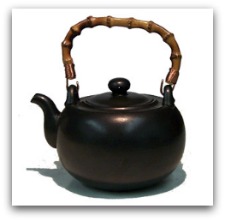
When The Pot Calls The Kettle Black: Dealing with Projection

When The Pot Calls The Kettle Black: Dealing with Projection

“You’re so passive! Why can’t you stand up for yourself?!”

“You’re over-involved with your family. Don’t you consider me!?”

“You’re too emotional! You need to be more logical.”

“You get enraged over the smallest things. You should be more accepting.”


Ever find yourself hating something about your partner? Who hasn’t? Once the initial romance wears off, we get to see many more sides of our partners – both the good and the ugly. Most people dislike some things about their partner for two reasons:

  • Our partner’s traits and actions affect us negatively.
  • We dislike in our partners the very same traits we dislike in ourselves.

The first statement probably doesn’t surprise you, but the second might be a little hard to swallow. In therapy terms, this is called ‘projection’. The idea is that it’s more palatable to see characteristics we dislike in other people than it is to see them in ourselves. It’s so much easier for the pot to call the kettle black. We tend to hate a trait in others (especially if the person is our spouse) rather than to recognize, “Oh, I do this too, sometimes.”

Let me give you an example. In this scenario, a wife tells her husband that an out of town cousin will stay at their house in a few weeks. It’s going to be on a night when the husband usually works late and she says “If you can be here that night, great.  If not, that’s okay.” Even though she says this, the husband knows it’s important to her that he be there and it’s important to him too. Although it’s not easy, the husband manages to change his work schedule. The morning before the cousin’s arrival, the wife tells him that the plans have changed and her cousin is coming a different night instead.  Right away, the husband feels anger swell up inside him. He yells, “What?!  You didn’t even ask me – you went ahead without talking to me first?! Do you know what I had to do to get coverage for that night!? Change it back!” When the wife refuses and says that he doesn’t have to be there, he moves into attack mode with, “You won’t ask her because you let others dictate your schedule. You can’t stand up for us or for yourself. You’re so passive! You’re weak!”

Why did the husband get so angry in this situation? There are several reasons. The first is totally legitimate: It’s not okay for one spouse to make unilateral decisions about things that affect both partners. It’s not that one spouse needs the other’s permission to do something; it’s just that couples should talk about things before deciding.

There are other valid reasons here, but the reason I want to focus on is this: the husband projected traits that he, himself, wrestles with onto his spouse. One clue to this was the way he labeled her behavior by calling her passive and weak. The husband got angry because, on some level, he realizes there are times he can be passive or fail to stand up for himself.  Since this is hard for him, he becomes enraged when he sees the same trait in his spouse.

How can the husband turn his anger or ‘energy’ into something productive? He can own his own passivity and develop the opposite trait: assertiveness. This is an opportunity for him to grow part of himself. Buried in this conflict is the chance to be different.

In this situation, the husband has the opportunity to be assertive by talking to his wife and cousin. He could say, “I felt hurt when you changed the plans without talking to me first. I was annoyed. I had to go through a lot to make that night available, and then you changed it. I wanted to be there. Next time, please talk to me before you decide what to do.” Instead of resenting his wife’s passivity, he can take this opportunity to grow his own assertiveness.

When you find yourself triggered by something that your partner does or says, you can take it to the next level by being curious about yourself. Ask yourself:

  • What is the trait or characteristic that’s angering or hurting me?
  • Do I struggle with that same trait sometimes?
  • What is this an opportunity for me to learn to be instead?

To find out more, schedule an appointment here at Couples Therapy Center. Call 908-246-3074, email mkeller@couplestherapycenterofnj.com 

The Importance of Sex in Marriage

Remember the intensity of sex at the beginning of your relationship?  Sex was fun, passionate and, likely, more frequent than it is now.  The fact that this romantic stage of relationship fades is a normal, and certainly disappointing, course of a committed relationship.  Once the intensity wears off or the frequency dies down, you may view sex any number of ways: as something you miss, something you no longer have the time or desire for, or something you’re relieved not to have to do. Read More

Old Hurts: How Being Mindful Can Help You Move Past Them

There are many people who think that their past doesn’t have any influence on them today.  They may feel this way because their childhood was years or decades ago, or perhaps because they’ve created a different life for themselves now.  Others might discount the importance of their childhood on their present because they no longer live with their parents or may have told themselves they moved beyond it.  However, it is not accurate to believe our past is completely in the past.  Why?  Because our crucial development took place in childhood and hurts or events from our past can have a negative influence on our current relationships without us even being aware of it. Read More